Hyperion Medical logoHyperion Medical (877) 275-8760 Book a demo
Diagnostics · Smart-ABI

ABI and neuropathy testing systems

Smart-ABI is a Hyperion Medical company. Its four point-of-care devices and one reporting platform test for peripheral artery disease and neuropathy, and each one has a full product page on smartabi.com.

4 devicesPlus the Hub reporting platform
5 to 7 minPer study
MA-operatedDesigned for medical assistants
3,500+U.S. practices
Compare the systems

Which Smart-ABI system fits your practice?

Four devices and one software platform, each built around a different test. The table lists what each one measures, how long a study takes and the practices Smart-ABI names for it.

Smart-ABI systems at a glance
SystemMeasuresStudy timePractices
Smart-LEDA+ Cuff-based ABI, Toe-Brachial Index (TBI) and sudomotor function, plus microvascular data About 7 minutes for the vascular and sudomotor studies together Endocrinology and diabetic care, nurse practitioners, wound care, ACOs
Smart-ABI Four-limb, cuff-based ABI with VPR waveforms About 5 minutes Wound care, cardiology and vascular, primary care and NP-led practices
Smart-ABI+ Everything in Smart-ABI, plus TBI About 5 minutes Podiatry and foot-and-ankle, and patients with incompressible ankle vessels
Smart-Neuro Cardiac and peripheral autonomic function (CAN and PAN) Five guided steps, captured in real time Neurology practices and autonomic disorders clinics, including peripheral and diabetic neuropathy workups
Smart-ABI Hub Not a test: the reporting, sign-off and EMR software for every device above Receives each study as it finishes Every Smart-ABI practice, including rural and community practices without easy specialist access

Study times are total patient throughput, from entering patient information to results, as published by Smart-ABI.

The systems

What each system does

Each system has its own page on smartabi.com with sample reports and a demo booking link.

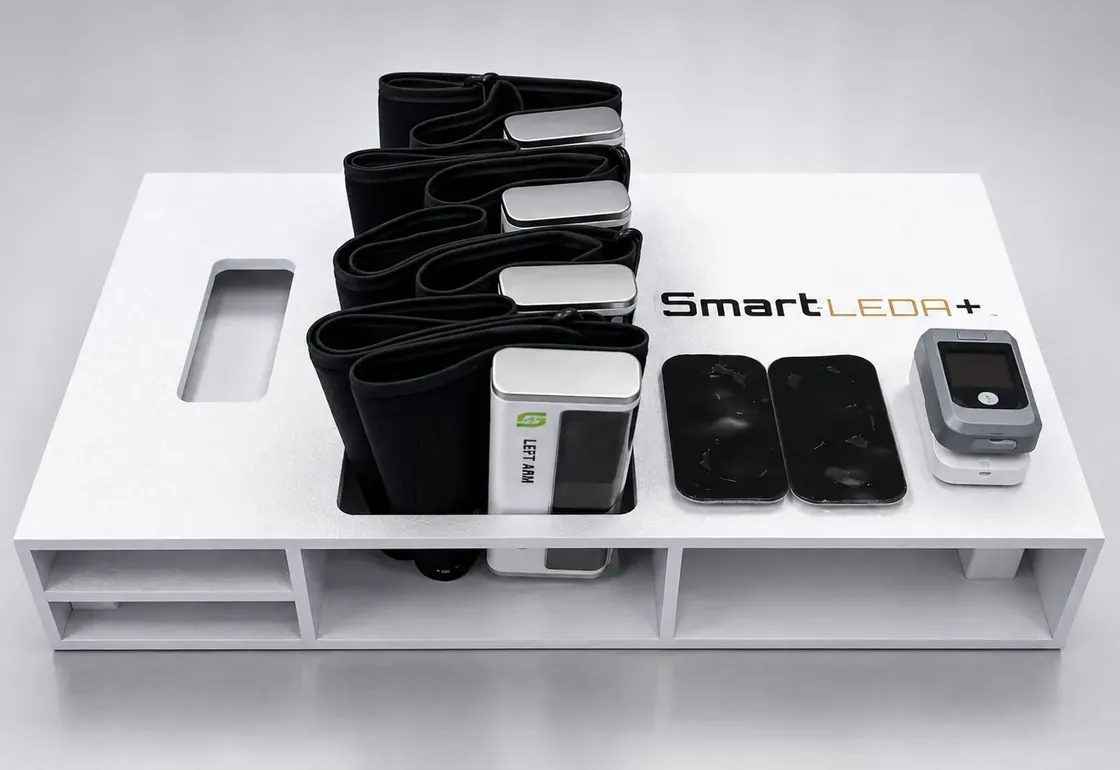
Smart-LEDA+ ABI, TBI and sudomotor testing kit in its white case, holding the wireless cuffs, electrode pads and a pulse oximeter
ABI · TBI · Sudomotor

Smart-LEDA+

LEDA stands for Lower Extremity Disease Assessment. One wireless kit runs a cuff-based ABI, a Toe-Brachial Index and a sudomotor test in the same visit, so a single appointment looks at both peripheral artery disease and peripheral autonomic neuropathy. Its report also carries central aortic systolic pressure, peripheral augmentation index, pulse wave velocity and a left and right arm comparison.
Smart-LEDA+ on smartabi.com →

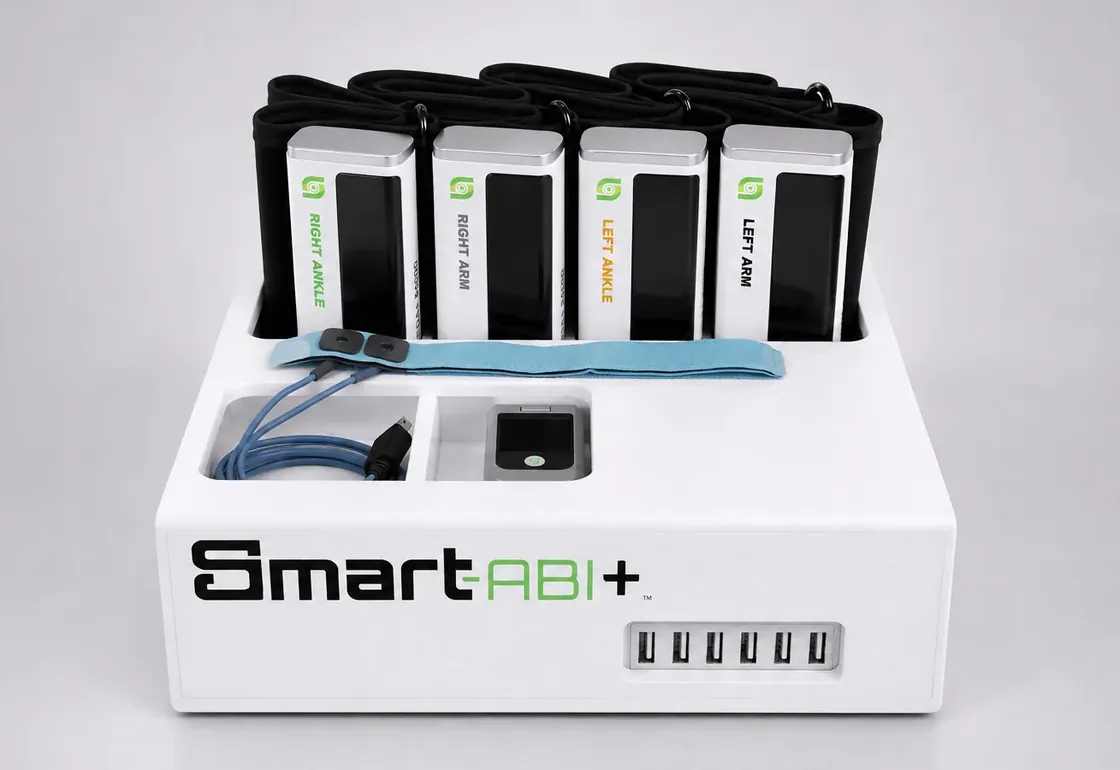
Smart-ABI+ ankle-brachial index and toe-brachial index testing device with four wireless cuffs
ABI · TBI

Smart-ABI & Smart-ABI+

Smart-ABI puts cuffs on all four limbs and returns an ABI value with volume plethysmography records (VPR) waveforms in about five minutes. Smart-ABI+ runs the same workflow and adds the Toe-Brachial Index, which is used when calcified ankle arteries will not compress. That pattern is common in older patients and in patients with long-standing diabetes or chronic kidney disease.

Smart-ABI and Smart-ABI+ on smartabi.com →

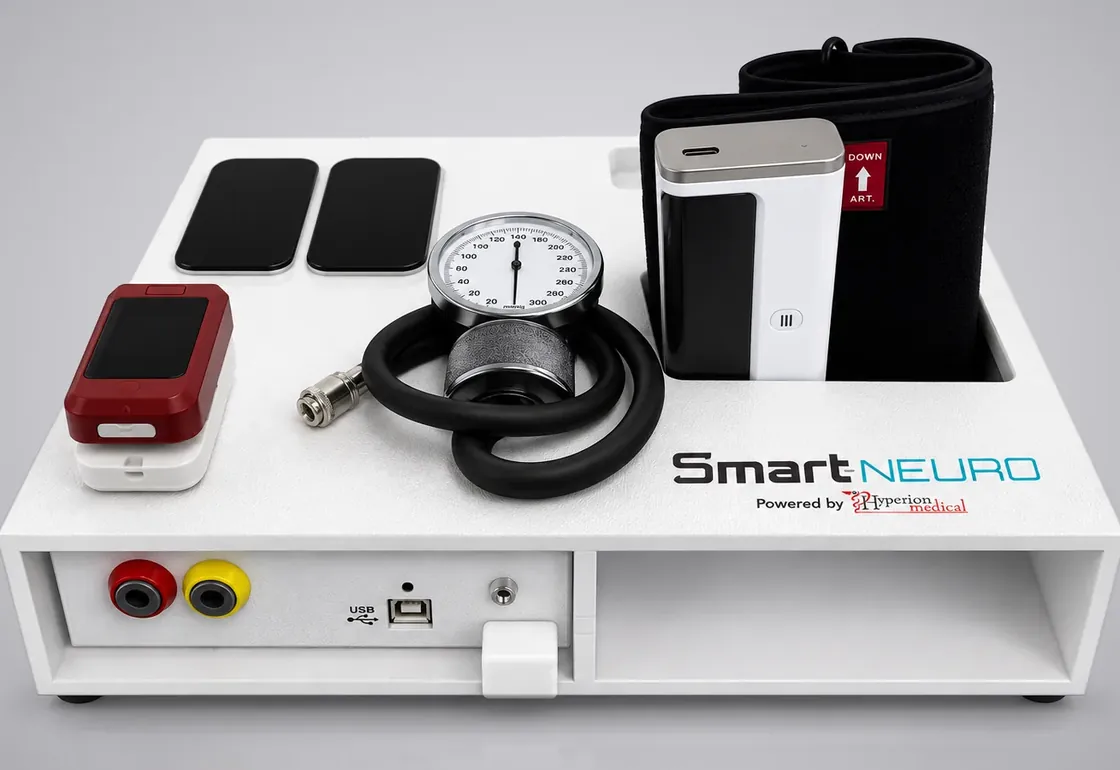
Smart-Neuro autonomic testing kit in its white case, with electrode pads, pulse oximeter, gauge and arm cuff
Autonomic testing

Smart-Neuro

Smart-Neuro is the autonomic testing system for neurology practices. It produces two assessments: a cardiac autonomic assessment built from heart-rate variability and reflex tests, and a sudomotor function analysis of sweat and nitric oxide response by foot. It is built to help evaluate peripheral autonomic neuropathy (PAN) and cardiac autonomic neuropathy (CAN), and its documentation is designed around CPT 95921 and 95923.

Smart-Neuro on smartabi.com →

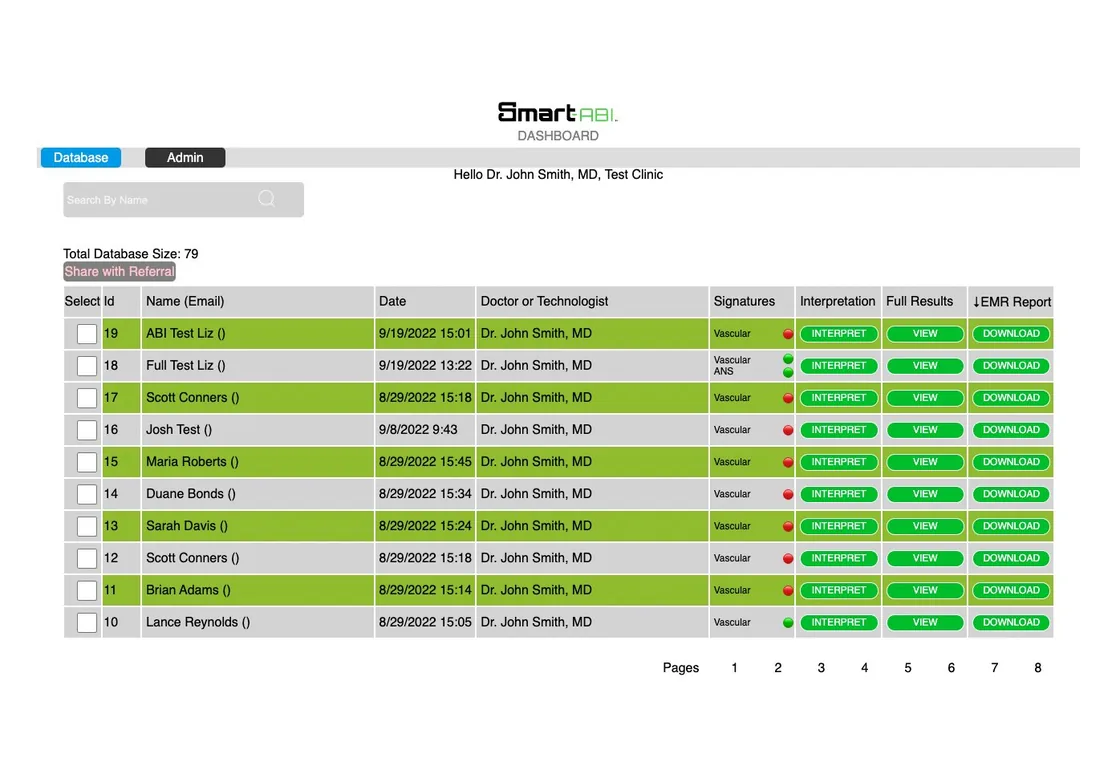
Smart-ABI Hub dashboard: a table of patient studies with columns for signatures, interpretation, full results and the EMR report
Reporting software

Smart-ABI Hub

Smart-ABI Hub is the cloud software that every Smart-ABI device reports into. Each study becomes a color-coded report with trending across visits. A physician can sign it or route it to a qualified specialist for interpretation, and the signed report is packaged for most major EMR systems. Data travels over HIPAA-secure channels and is kept locally and on HITRUST-certified cloud servers.

Smart-ABI Hub on smartabi.com →

A CPT code describes a service; it does not guarantee payment for it. Payment depends on documentation and medical necessity.

The tests

What do these tests measure?

Four measurements run across the Smart-ABI family. Each row names the systems that perform it.

Tests and the systems that run them
Ankle-Brachial Index (ABI) Ankle pressure divided by arm pressure, taken with inflatable cuffs. It is used to identify peripheral artery disease and the arterial blockages that reduce blood flow to the legs.Smart-ABI · Smart-ABI+ · Smart-LEDA+
Toe-Brachial Index (TBI) Toe systolic pressure divided by brachial systolic pressure. Calcified ankle arteries can make an ABI read falsely high, and the smaller arteries of the toes calcify less often, so TBI is the measurement used for those patients.Smart-ABI+ · Smart-LEDA+
Sudomotor function The response of the sweat glands in the feet, which are controlled by the smallest unmyelinated nerve fibers. Changes there are among the earliest signs of autonomic dysfunction, and can appear before a conventional exam looks abnormal.Smart-LEDA+ · Smart-Neuro
Cardiac autonomic tests Heart-rate variability, the Valsalva, E/I and K30/15 ratios, and the change in blood pressure on standing. Together they assess cardiac autonomic function, including orthostatic hypotension and intolerance.Smart-Neuro
FAQ

Questions about the ABI systems

Is Smart-ABI part of Hyperion Medical?

Yes. Smart-ABI is a Hyperion Medical company. Both brands belong to Hyperion Medical Technologies, Inc., at 15932 Midway Road in Addison, Texas, and both use the same phone number, (877) 275-8760.

Which Smart-ABI system tests for neuropathy?

Two of them. Smart-LEDA+ adds a sudomotor test for peripheral autonomic neuropathy to its ABI and TBI study. Smart-Neuro is a dedicated autonomic system that assesses both cardiac and peripheral autonomic function, and it is aimed at neurology practices.

When is a Toe-Brachial Index used instead of an ABI?

When the ankle arteries are calcified and will not compress, an ABI can read falsely high. The smaller arteries of the toes are less often calcified, so a TBI is used for those patients, who are often older or have long-standing diabetes or chronic kidney disease. Smart-ABI+ and Smart-LEDA+ both measure TBI.

Who on staff runs a Smart-ABI test?

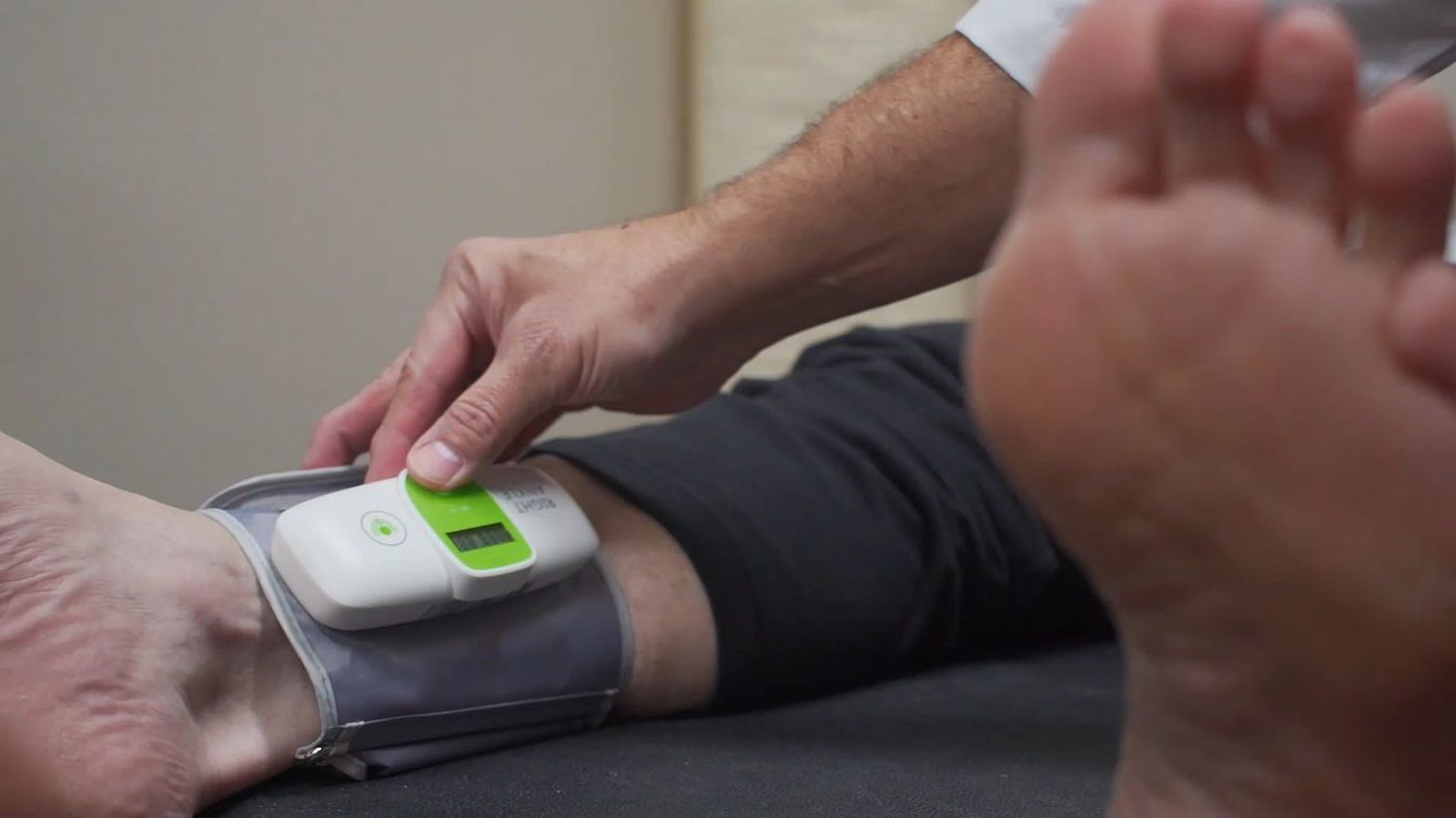
A medical assistant can run it. The cuffs are wireless and color-coded with directional arrows, a test starts with one click, and an audio-guided screen walks through patient setup. Smart-Neuro uses a five-step guided sequence that needs no specialized technician.

How do I book a Smart-ABI demo?

Use the Book a Smart-ABI demo link at the top of this page, which opens the Smart-ABI scheduling page, or call (877) 275-8760. A Smart-ABI specialist covers which patients to test, how the workflow runs, reimbursement and what the finished report looks like.