
Laser treatment for cellulite with Carbon Wave on a Q-switched Nd:YAG
A course-based cellulite treatment delivered with a laser many practices already own. What causes the dimpling, how the shockwave reaches it, who the protocol selects, and what a course looks like.
What causes cellulite dimpling?
The provider documentation places the cause in the fibrous septae beneath the skin. Where those bands are old and collagen-deprived, they tether the surface, and the skin cannot expand and contract normally, which shows as dimpling.
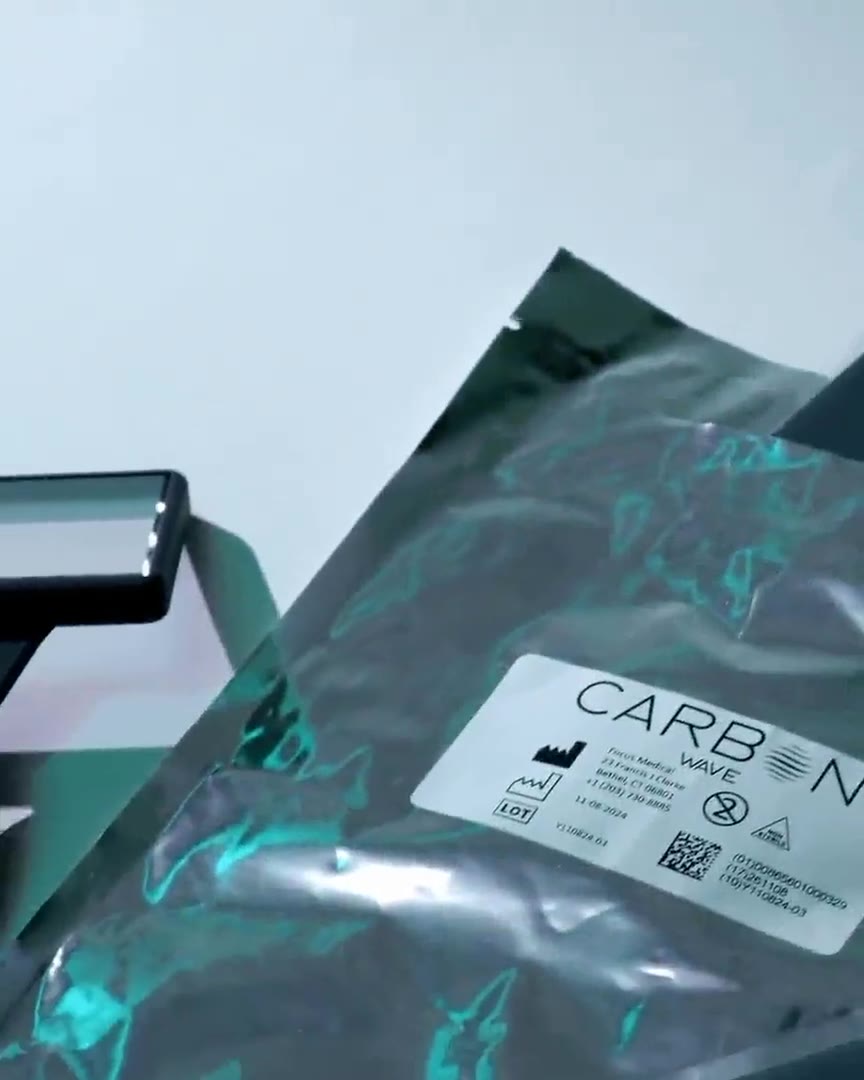
The Focus Medical provider FAQ describes the treatment as acoustic subcision: high-pressure shockwaves break the old, collagen-deprived septae so the surface can move normally again, and the same mechanical injury prompts new collagen growth in the septae left in place.
How does it compare with other shockwave approaches?
The Kassir manuscript places Carbon Wave against the two shockwave categories already used on cellulite. Its figures are summarized here.
| Approach | Peak pressure | Pulse duration | As described in the manuscript |
|---|---|---|---|
| Low-energy extracorporeal shockwave (ESWT) | About 1 MPa | About 1 millisecond | Introduced for cellulite in 2004; typically 6 to 12 sessions, with results lasting 4 to 6 weeks, attributed to an inflammatory response |
| High-energy rapid acoustic pulse devices | About 10 MPa | About 100 nanoseconds | Shorter, higher-pressure pulses, with evidence of selective disruption of fibrous septae |
| Carbon Wave patch with compression optic | About 40 MPa (12 MPa without the optic) | About 10 nanoseconds (the Q-switched pulse) | Laser pulse converted to a shockwave at the patch and contained by the optic |
Figures as reported in the manuscript. The 12 MPa Carbon Wave figure is a bench measurement taken with a hydrophone and oscilloscope at 2.0 J/cm². The evidence for Carbon Wave in tissue is one ex vivo porcine skin study, whose author states that in vivo research is needed to confirm clinical efficacy. Read the evidence summary →
Which patients does the protocol select?
Who
Patients with cellulite dimpling, assessed standing. The protocol covers mild through severe dimpling and notes that more severe cases may need more treatments. A BMI under 30 is the profile it identifies as ideal. Skin laxity may see a mild to moderate improvement.
Where
The back of the thighs and the buttocks are the primary areas, and the provider FAQ adds the stomach and upper arms. Patches go on the areas with the most dimpling, on clean skin with no lotion or fragrance.
What does a course of treatment involve?
Assess and photograph
Standing assessment and photographs before the first session, then the patient lies face down. Three patches cover a typical treatment.
The session
The brochure describes a session completed in minutes, with a mild sensation for the patient. The FAQ is direct that pain or discomfort is a reason to stop.
Repeat and review
Two to three sessions four weeks apart. Results vary and may be visible two to four weeks after treatment; post-treatment photographs record the change.
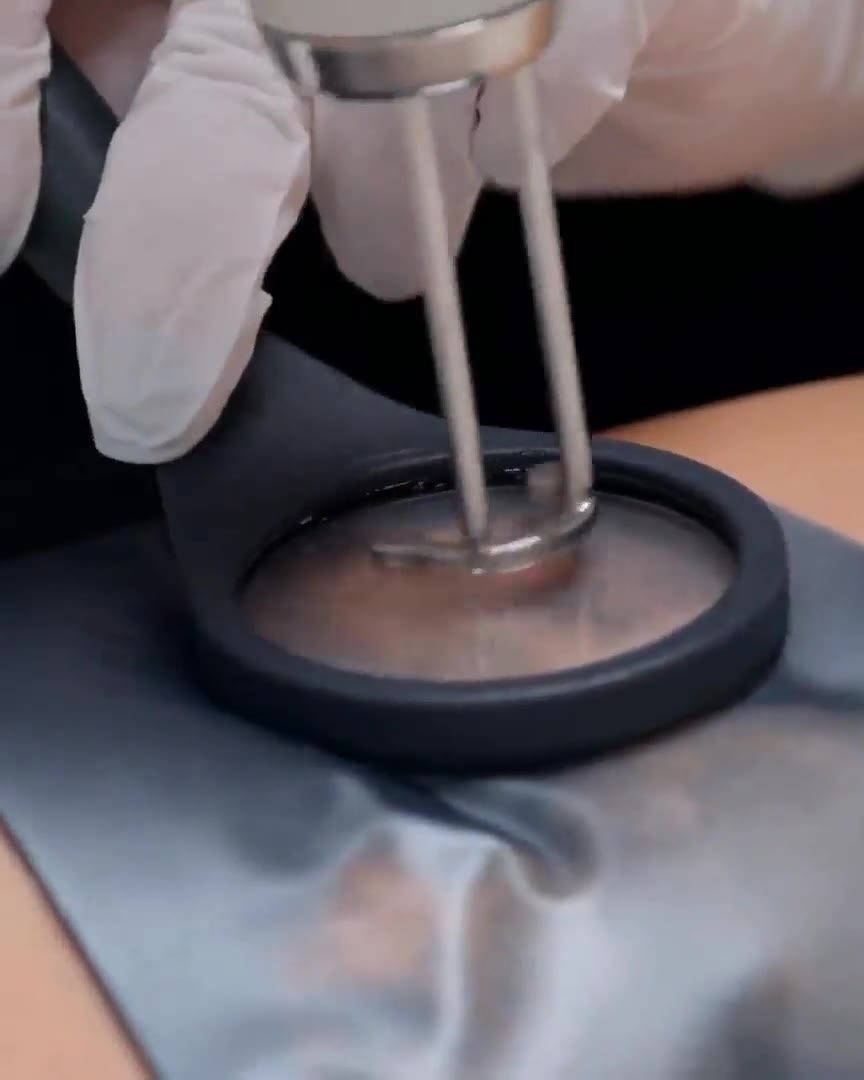
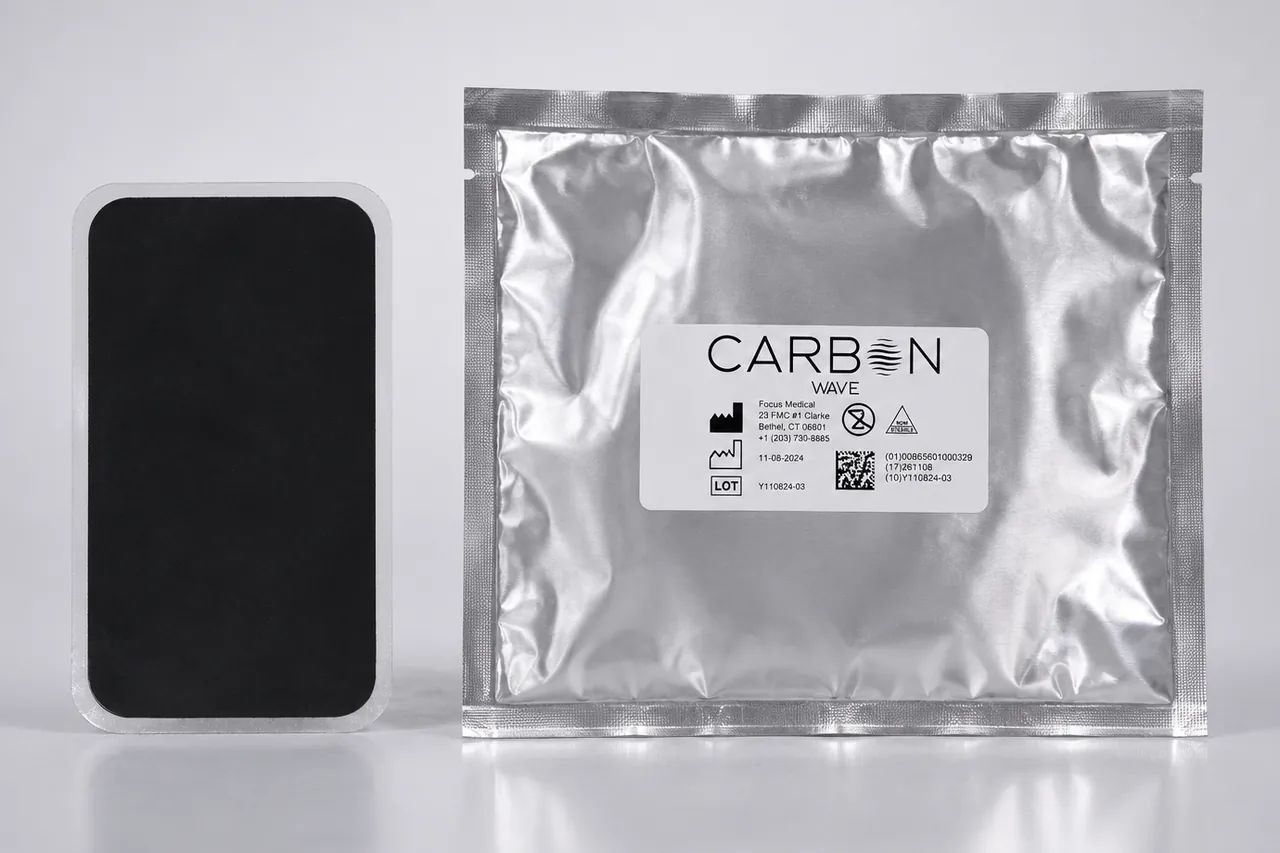
The consent template lists possible short-term effects including reddening, mild burning, bruising or blistering. Side effects and precautions →
What does a practice need to offer it?
A compatible laser
A 1064 nm Q-switched Nd:YAG with a nanosecond or picosecond pulse, run at the largest spot size the device offers. Many systems bought for tattoo and pigment work qualify. Check the compatible laser list →
Patches, an optic and training
Single-use patches in sealed foil packs, one reusable compression optic, and training for the staff who will deliver the treatment. The ROI model for a practice adding the treatment line is sent on request.
Asked and answered
Can Carbon Wave treat cellulite on the abdomen and arms?
The protocol names the back of the thighs and the buttocks as the treatment areas, and the Focus Medical provider FAQ adds the stomach and upper arms.
How many Carbon Wave sessions are needed?
The provider FAQ plans two to three sessions at four-week intervals, and notes that more severe dimpling may need more.
Is there downtime after a Carbon Wave session?
The brochure describes the treatment as non-invasive with no downtime. The consent template lists possible short-term effects, including reddening, mild burning, bruising or blistering, and soreness in the treated area.
Does Carbon Wave need a new laser?
No. It is used with a Q-switched Nd:YAG laser the practice already owns, together with the patch and a reusable compression optic.
Keep reading
Carbon Wave patch
The patch itself: mechanism, protocol, the ex vivo study and specifications.
Will Carbon Wave work with my laser?
Tier 1 and tier 2 devices with fluence, spot size and optic shape.
Book a demo
See the patch, the optic and a treatment pass on a Q-switched laser.