
Early fractional CO₂ laser treatment for surgical scars
Treating an incision while it is still remodeling, from suture removal through the first month, rather than waiting a year for the scar to mature. What the published trials did, when they started, and what they found.
Why treat a scar in its first month?
The traditional advice was to leave a surgical scar alone until it matured, often a year, and then resurface it. Over the last fifteen years, controlled trials have started fractional CO₂ much earlier, while the wound is still laying down and reorganizing collagen.
A pooled analysis of 14 controlled trials, published in 2025, found that starting at or within one month of surgery reduced scar severity against untreated controls, while starting more than three months after surgery did not produce a significant improvement. An earlier meta-analysis of randomized trials found a benefit in the same direction for lasers applied in the first month.
For a surgical practice, that means treatment can be scheduled alongside postoperative visits, starting around suture removal.
When is an incision ready to treat?
The trials anchor the start to the state of the wound, not to a fixed number of days.
The gate is a closed wound
The studies treated closed, healed incisions, mostly at or soon after suture removal. One mastectomy trial chose suture removal at two to three weeks because re-epithelialization was expected to be complete by then. An incision that is open, infected, dehisced or slow to heal is not a candidate for a routine early-scar protocol.
Anatomy changes the plan
Facial, breast, thyroidectomy and traumatic scars were treated with different settings in the literature. Thin skin, recently undermined tissue, implants and areas with compromised blood supply each call for a separate protocol decision by the treating clinician.
- Day of suture removalFacial Mohs scars
- Two to three weeksMastectomy and thyroidectomy scars
- About three weeksPostoperative and elective plastic surgery scars
- Up to four weeks after suture removalFacial traumatic scars
What did the trials find?
Six clinical trials and two meta-analyses, each checked against its PubMed record. Session counts ranged from a single treatment to three.
| Study | First treatment | Design | Finding |
|---|---|---|---|
| Sobanko et al., 2015Facial Mohs surgery scars, 20 patients | Day of suture removal | Randomized split-scar, evaluator-blinded; one session | Patients preferred the treated half (P=0.002). The blinded Vancouver Scar Scale difference was not significant (P=0.31). No laser side effects were noted.Sobanko JF, Vachiramon V, Rattanaumpawan P, Miller CJ. Early postoperative single treatment ablative fractional lasing of Mohs micrographic surgery facial scars: a split-scar, evaluator-blinded study. Lasers Surg Med. 2015;47(1):1-5. DOI · PubMed |
| Shin et al., 2021Mastectomy scars, 15 patients | At suture removal, two to three weeks after surgery | Randomized controlled split-scar, blinded | Lower Vancouver Scar Scale scores on the treated side (P=0.002) and lower visual analog scale scores (P=0.02).Shin HW, Suk S, Chae SW, Yoon KC, Kim J. Early postoperative treatment of mastectomy scars using a fractional carbon dioxide laser: a randomized, controlled, split-scar, blinded study. Arch Plast Surg. 2021;48(4):347-352. DOI · PubMed |
| Jung et al., 2011Thyroidectomy scars, 23 patients | Two to three weeks after surgery | Single session, two passes | Vancouver Scar Scale scores fell significantly, and at three months 12 of the 23 patients showed improvement above 51%.Jung JY, Jeong JJ, Roh HJ, et al. Early postoperative treatment of thyroidectomy scars using a fractional carbon dioxide laser. Dermatol Surg. 2011;37(2):217-223. DOI · PubMed |
| Lee, Zheng and Roh, 2013Postoperative scars, 16 scars in 15 patients | Three weeks after surgery | Prospective split-scar, evaluator-blinded; two sessions two weeks apart | Greater fall in Vancouver Scar Scale score on the treated half, mainly texture and thickness, and greater patient satisfaction.Lee SH, Zheng Z, Roh MR. Early postoperative treatment of surgical scars using a fractional carbon dioxide laser: a split-scar, evaluator-blinded study. Dermatol Surg. 2013;39(8):1190-1196. DOI · PubMed |
| Alberti et al., 2017Elective plastic surgery scars, 42 patients | Scars up to three weeks old | Randomized, double-blinded; fractional CO₂ against silicone gel | Laser group ahead on flexibility and pigmentation at two months and overall at six months (P=0.03).Alberti LR, Vicari EF, De Souza Jardim Vicari R, Petroianu A. Early use of CO2 lasers and silicone gel on surgical scars: prospective study. Lasers Surg Med. 2017;49(6):570-576. DOI · PubMed |
| Esmat et al., 2026Facial traumatic scars, 45 patients | At suture removal, or two or four weeks after it | Randomized to three timing groups; three sessions four weeks apart | All three groups improved on the Vancouver Scar Scale with no significant difference between them; the two-week group also improved in epidermal thickness and scar depth on optical coherence tomography.Esmat SM, Khafagy MM, Mostafa BA, Amer MA. Traumatic scars: evaluation of the best timing for early intervention with fractional CO2 laser using optical coherence tomography. Photodermatol Photoimmunol Photomed. 2026;42(2):e70071. DOI · PubMed |
| Kent et al., 2020Meta-analysis, randomized trials of lasers on surgical scars | Under one month after surgery | Systematic review of 8 trials, meta-analysis of 4 | Pooled result favored early laser treatment (standardized mean difference 0.39, 95% CI 0.05 to 0.74, P=0.03).Kent RA, Shupp J, Fernandez S, Prindeze N, DeKlotz CMC. Effectiveness of early laser treatment in surgical scar minimization: a systematic review and meta-analysis. Dermatol Surg. 2020;46(3):402-410. DOI · PubMed |
| Ji et al., 2025Meta-analysis, fractional CO₂ on surgical scars | At or within one month, compared with later starts | 14 controlled trials, 492 participants or scars | Starting within one month reduced scar severity against controls (mean difference -1.66, 95% CI -2.31 to -1.01). Starting more than three months after surgery showed no significant improvement.Ji Q, Luo L, Ni J, Pu X, Qiu H, Wu D. Fractional CO2 laser to treat surgical scars: a system review and meta-analysis on optimal timing. J Cosmet Dermatol. 2025;24(1):e16708. DOI · PubMed |
These are published studies of fractional CO₂ devices as a category. The settings reported in each paper belong to the device studied and do not transfer between platforms; energy, density, spot geometry and scanner behavior differ from one system to the next.
Running an early-scar protocol on Selene
Tips and settings
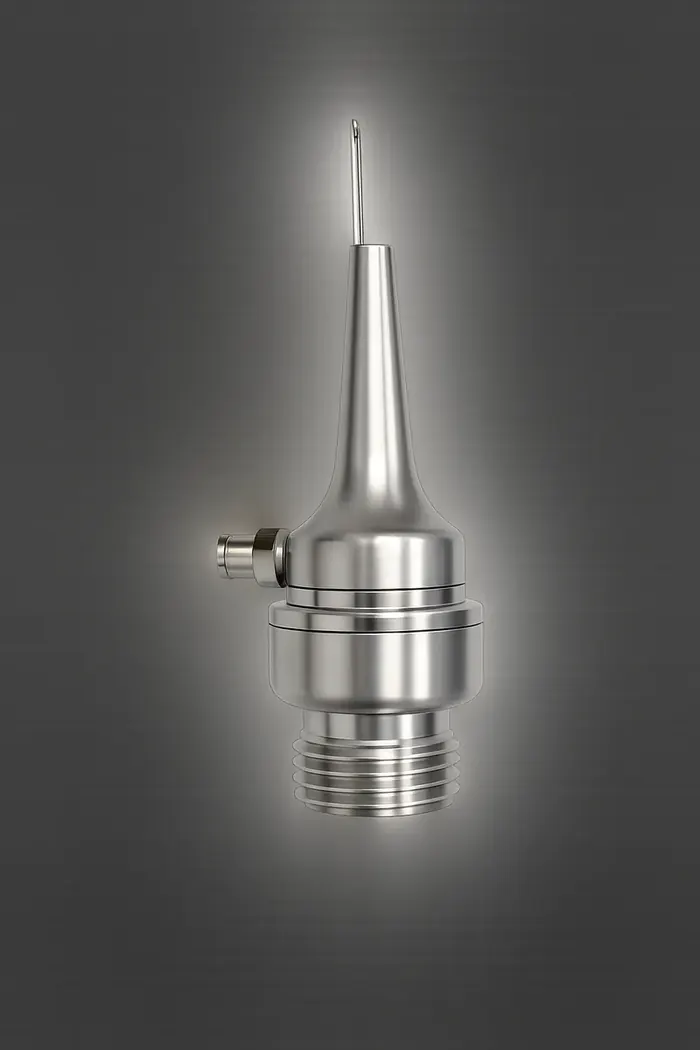
Selene carries fractional tips and a surgical tip on one cabinet, with energy, pattern and treated area set per patient. The early-scar protocol guidance from the Hyperion Medical clinical team is matched to your tips and configuration rather than copied from a study's device.
Training before the first patient
The staff who will run the protocol are trained in your room, and questions after the first cases go to the same trainers. The patient pre-treatment and aftercare pages in the operator manual are written to be copied and handed out.

Asked and answered
How soon after surgery can a scar be treated with fractional CO₂?
In the published trials, first treatment ranged from the day of suture removal to about four weeks after it, in closed, healed incisions. A 2025 meta-analysis found that starting at or within one month of surgery reduced scar severity, and starting after three months did not.
How many sessions did the studies use?
Between one and three. The Mohs and thyroidectomy trials used a single session, the postoperative scar trial used two sessions two weeks apart, and the traumatic scar trial used three sessions four weeks apart. The 2025 meta-analysis reports that most trials support two to three sessions or more.
Which scars were studied?
Facial Mohs surgery scars, mastectomy scars, thyroidectomy scars, general postoperative scars, elective plastic surgery scars and facial traumatic scars.
Does early fractional CO₂ replace silicone gel?
One randomized trial compared them directly: scars up to three weeks old treated with fractional CO₂ scored better at six months than scars treated with silicone gel alone. The studies do not establish whether the two should be combined.
Keep reading
Selene fractional CO₂
Fractional and surgical tips on one cabinet, installed and serviced direct.
Fractional CO₂ skin resurfacing
Contraindications, patient preparation and aftercare for resurfacing work.
Fractional CO₂ laser buying guide
The questions to put to any seller before signing a quotation.