
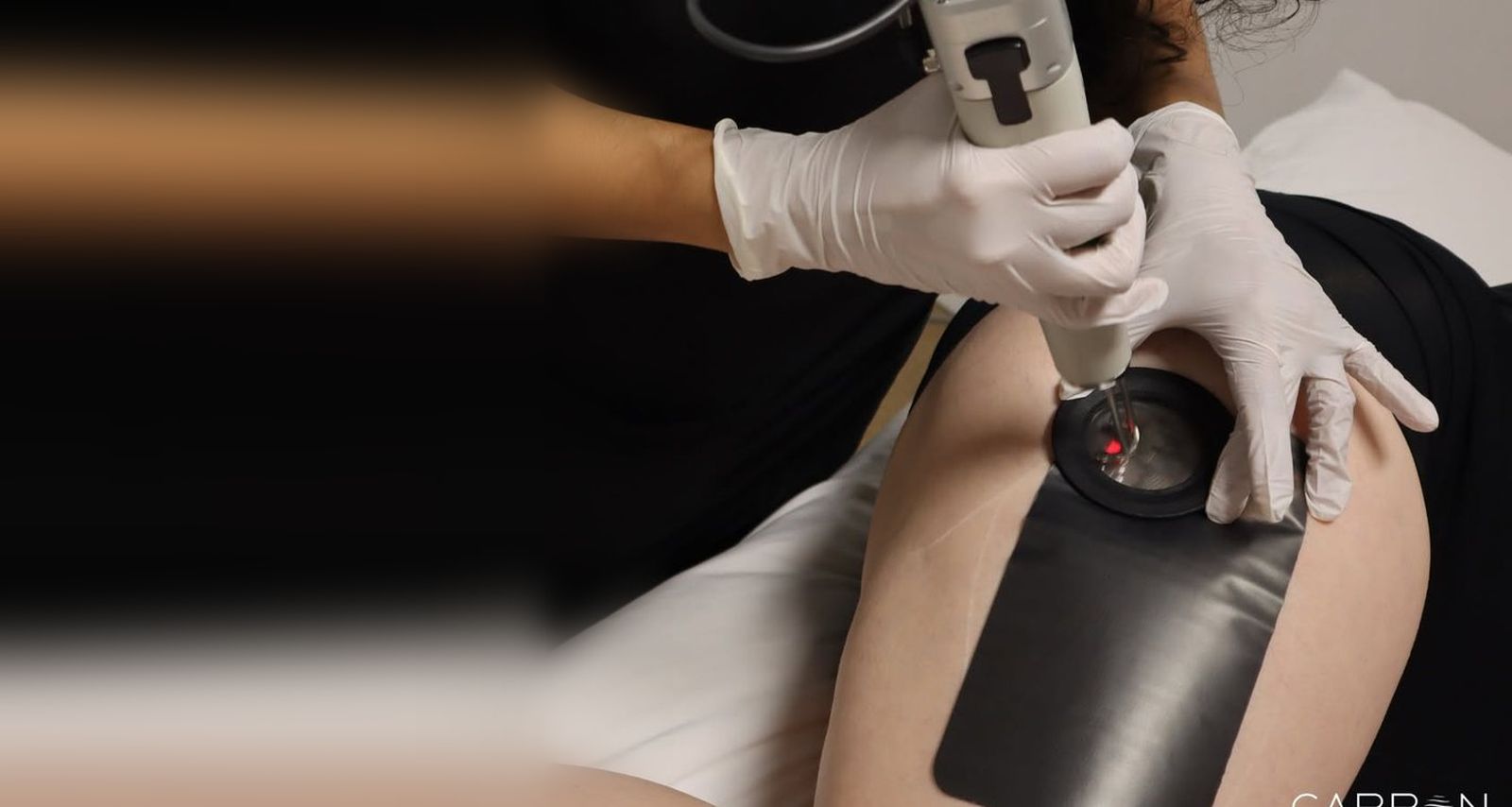
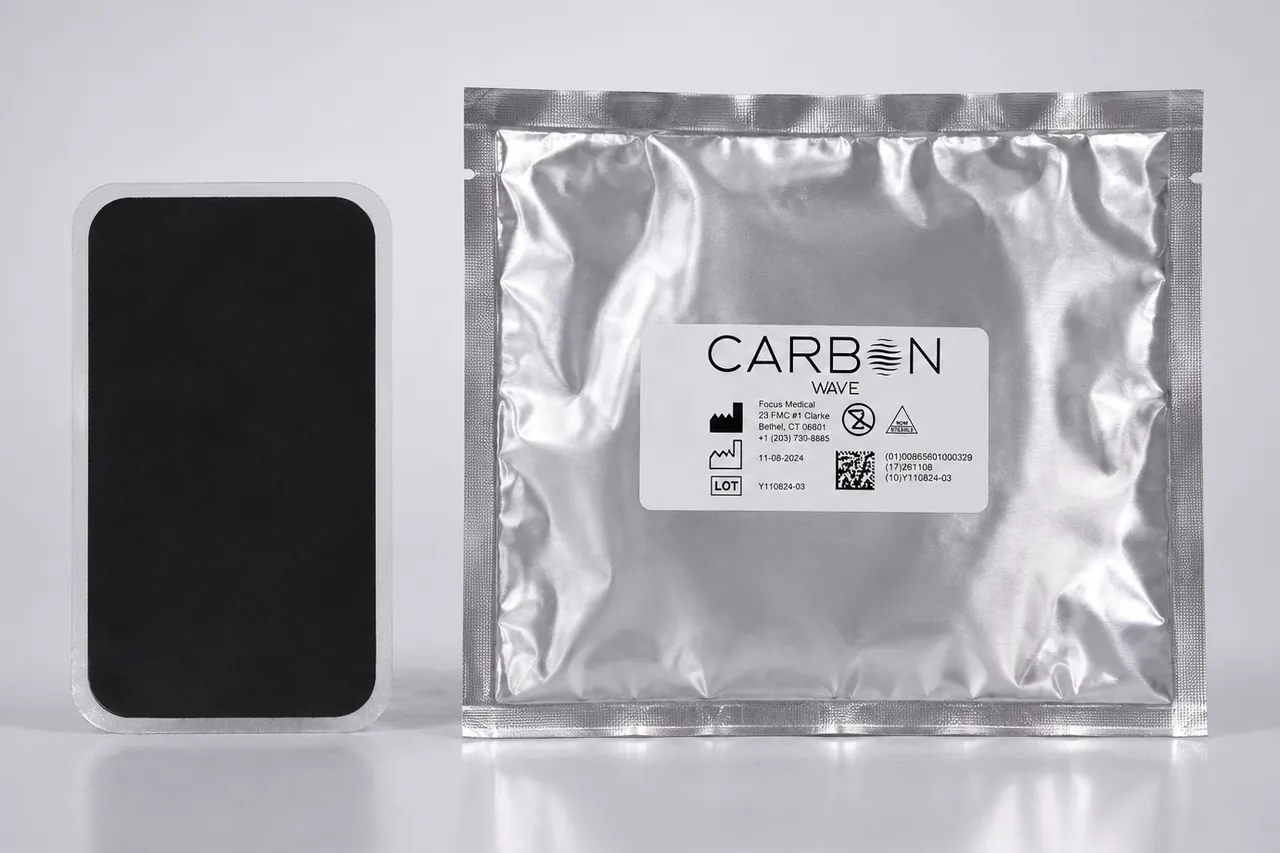
Carbon Wave patch
A carbon-embedded hydrogel patch that provides a surface target for a Q-switched Nd:YAG. Placed on the skin under a compression optic, it converts 1064 nm pulses into a contained mechanical shockwave, so a laser used for tattoo and pigment work can also deliver a course-based body treatment.
A consumable, not a capital purchase
Carbon Wave is a single-use hydrogel patch loaded with carbon. It supplies the surface target a Q-switched laser needs: each pulse lands on the patch and leaves as a pressure wave in the tissue underneath. Nothing is installed. The patch is the consumable you reorder.
Adding it to the practice
A Q-switched laser bought for tattoo removal and pigment work can also deliver Carbon Wave: a body treatment sold as a course of two or three sessions. What you are adding is a consumable and a reusable optic, not another capital purchase. Ask us for the ROI model.
Who the protocol selects for
The provider protocol is written for cellulite dimpling on the back of the thighs and the buttocks, with the abdomen and upper arms as further treatment areas. It covers mild through severe dimpling, notes that skin laxity may see mild to moderate improvement, and identifies a BMI under 30 as the ideal candidate profile. Standing photographs before and after are part of the sequence.
A chromophore you place, not one you find
Q-switched lasers act photo-mechanically: a nanosecond pulse is absorbed by a chromophore and the energy departs as a pressure wave rather than as heat. In tattoo and pigment work, the chromophore is already in the skin. Carbon Wave puts one on the surface, exactly where the wave should begin.
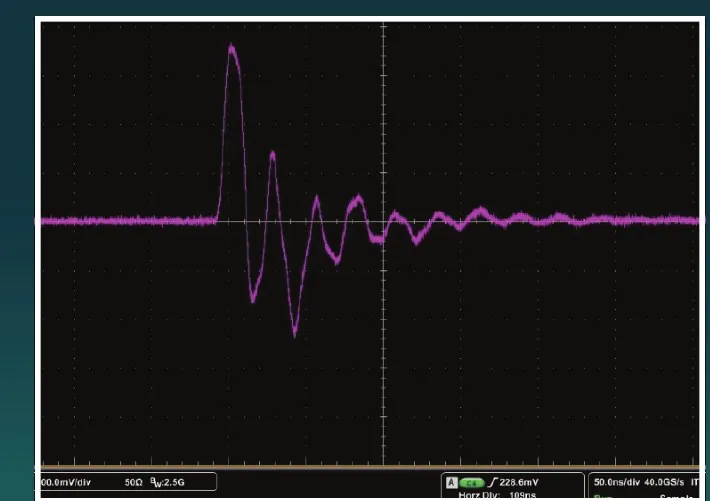
On the bench, a patch alone turns a 2.0 J/cm² pulse into a shockwave of roughly 12 MPa, measured with a hydrophone and an oscilloscope. Early assessments found the effect of that pressure variable, so the system gained a compression optic: a coated quartz glass window in a rigid holder, pressed over the patch during firing. The optic contains the wave and directs it into the tissue, and the measured pressure rises to approximately 40 MPa.
The patch darkens as it absorbs energy, and a fully opaque patch is a finished pass.
The literature calls it acoustic subcision
In the provider documentation, the shockwave breaks apart the stiff, collagen-deprived fibrous septae that tether the skin surface into dimples, and the same mechanical insult acts as a wound signal that promotes new collagen in the septae that remain. The comparison usually drawn is lithotripsy, where a shockwave fragments something dense without tearing up what surrounds it. That is a description of mechanism, not a promise of outcome.
Three patches, worked to opacity
The sequence has three stages: prepare, treat, and repeat after four weeks. What follows is a summary. The full treatment protocol is the version to work from, and we send it on request.
Prepare
Assess the patient standing and take photographs first. Patches go on clean skin, one per leg, and one cut into two pieces for the buttocks. The adhesive layer sits under a peel-away backing inside the foil pack.
Treat
Press the compression optic over the patch and fire at 10 Hz with a 50% overlap, in vertical and horizontal passes, three to four inside the optic footprint. Sensation should stay mild to medium; pain is a reason to stop.
Repeat
Plan two to three sessions at four-week intervals. Focus Medical places first visible change at two to four weeks after treatment and is direct that results vary.
Summarized from the Carbon Wave treatment protocol and Focus Medical. Confirm settings against the current protocol document with your representative before treating.
One ex vivo study
The evidence is a prospective experimental study on ex vivo porcine skin by Martin Kassir, MD, FAAD. The full text is available on request.
What was done
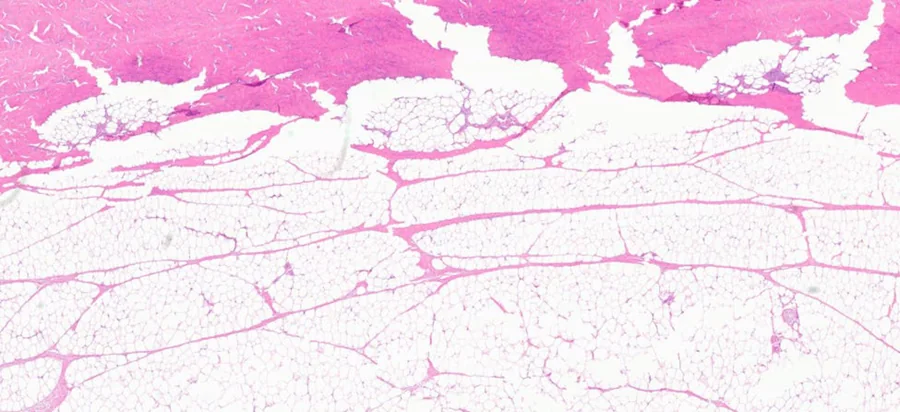
Patch plus compression optic on ex vivo porcine skin, fired with a Q-switched Nd:YAG at 2.0 J/cm², an 8–10 mm spot, 10 Hz and multiple overlapping passes. Treated samples were compared against untreated controls with hematoxylin and eosin staining.
What was found
Treated samples showed clear fragmentation and disorganization of fibrous tissue; control tissue held its native structure. The author states that further in vivo research is needed to optimize parameters and confirm clinical efficacy.
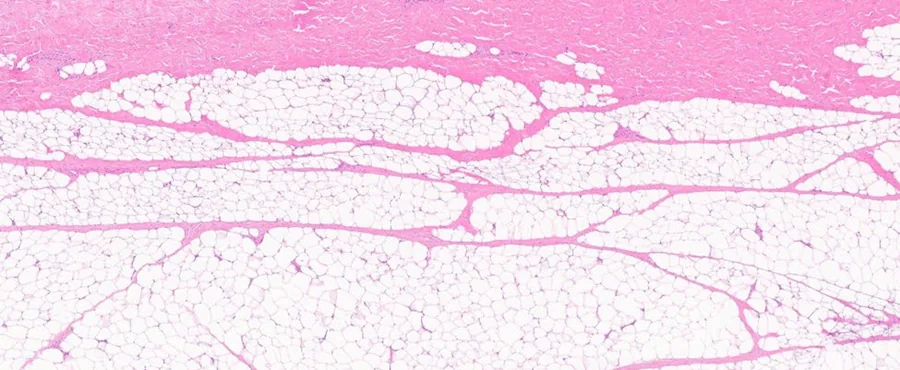 Untreated control
 After treatment
An ex vivo model is not a clinical trial, and no clearance claim is made for this treatment. Individual results vary. Ask your representative for current labeling before planning a protocol.
At length
| Laser | Q-switched Nd:YAG, 1064 nm. Not included; the practice's own device. |
|---|---|
| Pulse duration | Nanosecond or picosecond |
| Spot size | 8–12 mm, the maximum available on the device |
| Fluence | 1.5–2.5 J/cm² |
| Repetition | 10 Hz, 50% overlap |
| Technique | Vertical and horizontal passes, three to four within the optic, until the patch is fully opaque |
| Course | Two to three treatments at four-week intervals |
| Areas | Back of thighs and buttocks; also abdomen and upper arms |
| Format | Carbon-embedded hydrogel patch with an adhesive backing |
|---|---|
| Packaging | Sealed foil pack, single patient use |
| Per treatment | Three patches: one for each leg, one cut in two for the buttocks |
| Compression optic | Coated quartz glass in a rigid holder. Reusable; one per practice. |
| Bench pressure | ≈12 MPa from the patch alone; ≈40 MPa with the optic |
| Supplied by | Hyperion Medical, direct. No distributor. |
Figures from the Carbon Wave treatment protocol, Focus Medical and the ex vivo study. Where documents differ on fluence, the range shown is Focus Medical's; the protocol sheet lists 1.0–2.5 J/cm². Confirm current settings with your representative.
Trained before the first patient
Carbon Wave is supplied with a protocol and training.
Training
The staff who will deliver the treatment are walked through patch handling, optic technique and settings against your own laser before the first case is booked. The consent form and the protocol document come with the first order.
Reordering
Patches and optics come from the same people who trained you, on one phone number. If a question comes up mid-course, you call us directly.
On request
Clinical documents are configuration-specific and versioned, so we send current copies rather than publish them.
- Treatment protocolEquipment requirements, settings, patient selection and the step sequence.On request
- Focus Medical FAQMechanism, sensation, course length and pricing guidance.On request
- Ex vivo studyKassir, full text. Methods, histology and stated limitations.On request
- Patient consent formA template to adapt into your intake pack.On request
- ROI modelPackage pricing arithmetic for a practice considering the treatment line.On request
Elsewhere in the line
Selene fractional CO₂
The other half of the laser line: fractional resurfacing with four interchangeable tips, built by Focus Medical in Connecticut.
Early scar work with CO₂
The other half of the line treats surgical incisions in their first month of healing. The published evidence for early treatment, on the Selene page.
Why buy from Hyperion Medical?
Direct sales, installation, training and service from one company since 2010, with no distributor in between.
Asked and answered
Which lasers can fire it?
A Q-switched Nd:YAG at 1064 nm, nanosecond or picosecond, with a spot size of 8–12 mm per the protocol. If you are not sure whether your platform qualifies, tell us the make and model and we will check it against the protocol before you order.
Is this a carbon peel?
No. Nothing here is spread on as a lotion and nothing works by surface effect. The patch is a solid hydrogel target used under a compression optic, and the useful output is a contained mechanical shockwave beneath the surface. The two treatments share an ingredient, not a mechanism.
What does the patient feel?
Focus Medical describes a mild to medium sensation during treatment, no lingering discomfort afterwards, and is explicit that pain is a reason to discontinue rather than push through.
When is change visible?
Per Focus Medical, results vary and may be seen two to four weeks after treatment, across a planned course of two to three sessions at four-week intervals.
What is the evidence?
One prospective experimental study on ex vivo porcine skin, summarized in the Evidence section above. It found fragmentation and disorganization of fibrous tissue against intact controls, and calls for further in vivo research. We will send the full text on request.
What do I buy?
Single-use patches in foil packs and one reusable compression optic. The laser is yours already. Ask for the ROI model for the package pricing.